Driving in Scotland
Know the roads.
Enjoy the journey.
A little preparation goes a long way. Get comfortable with the essentials, then see passing places in action.
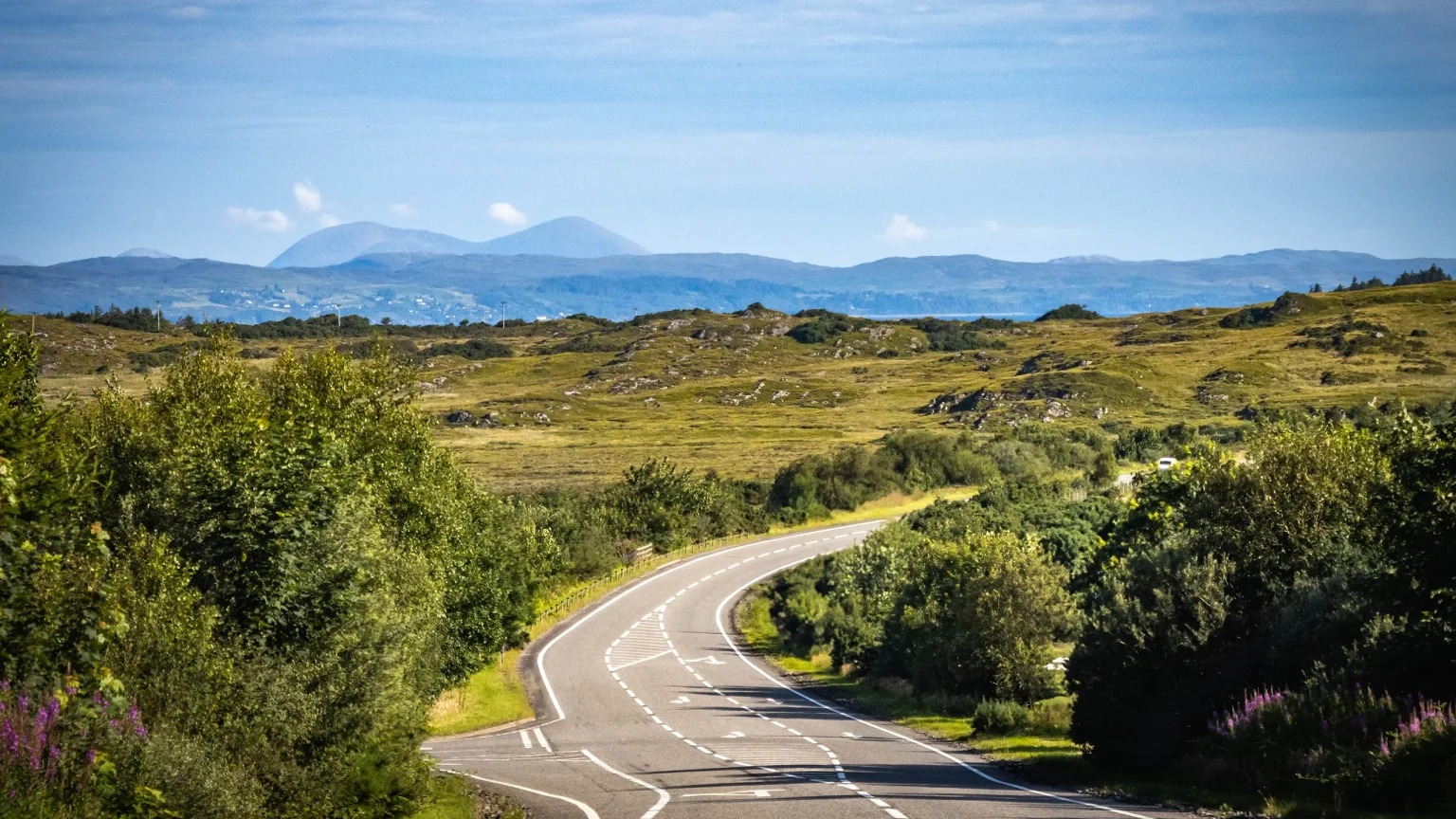
Wonderful views. Real, working roads.
Driving in Scotland takes you through busy towns, well-used main roads and quieter rural stretches. These roads carry local commuters, buses, delivery vehicles and lorries as well as visitors. Popular routes can be busy, especially in summer and around ferry arrivals.
Allow time for bends, changing weather and other road users. Enjoy the scenery from a safe stopping place, and give faster traffic room to pass when you can.
Single-track roads
Around one fifth of the WC300 Core Route, by road distance, is single-track. Most of the route has a lane in each direction.
Based on WC300’s route assessment: approximately 18–20%, excluding ferry travel and WC300+ Extensions.Single-track sections are straightforward to use once you know a few key rules: look ahead, use passing places and leave room for others. The three animations below show you how.
A few essentials. A more relaxed drive.
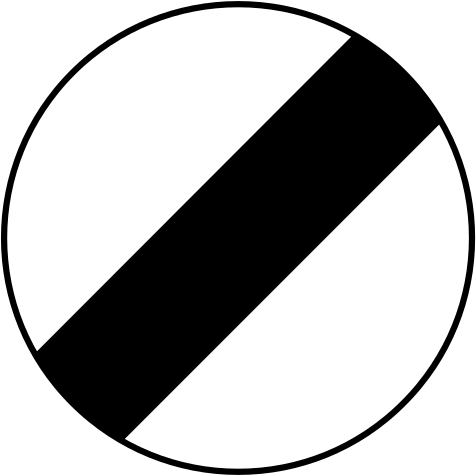
National speed limit
60 mphFor cars on single carriageways, unless a lower limit is signed. That is about 97 km/h.
For cars, the national limit is 70 mph on dual carriageways and motorways. Towing and some larger vehicles have lower limits. Check your vehicle’s limits.
Slow down in towns
Often 20 mphMany towns and villages have 20 mph limits. Watch for signs as you enter and as the limit changes.
20 mph is about 32 km/h. A speed limit is a maximum, not a target: drive more slowly when conditions require it.
Phone away
Eyes on the roadNever use your phone while driving. Set navigation before you move. If you need to use it, park safely first.
Hand-held use is illegal, including while stopped in traffic or at red lights. Read the phone rules.
New to driving here?
| Remember | On the road |
|---|---|
| Keep left | Drive on the left. Take extra care when setting off, leaving a car park or turning onto an empty road. |
| Roundabouts | Travel clockwise. Give way to traffic from your right unless signs, markings or traffic lights direct otherwise. |
| Miles and mph | Road distances are generally in miles and speed limits in miles per hour. 30 mph is about 48 km/h. A single carriageway has no central reservation; it is not the same as a single-track road. |
| Share the road | Give pedestrians, cyclists and horse riders time and space. Slow down for livestock and wildlife, and be ready to stop. |
| Buckle up | Wear seat belts and use the appropriate child restraint. Check everyone is ready before setting off. |
| Skip the alcohol | Scotland’s drink-drive limit is lower than England’s and Wales’s. If you are driving, the simplest choice is no alcohol. |
| Know your vehicle | Confirm your licence, insurance and hire requirements. In a motorhome, know your height and width before approaching bridges, narrow roads or car parks. |
| Leave more space | Allow room to stop on bends and narrow roads. In wet weather, stopping distances are at least double those on dry roads. |
More guidance: The Highway Code · Driving on an overseas licence · VisitScotland
Single-track roads: a few simple rules
One road. A little patience. Room for everyone.
Follow a few simple rules: look ahead, leave space and use passing places. Watch the examples below to see it in practice.
Use a passing place on your left, or wait opposite one on your right. Leave enough room for the other vehicle to pass.
Meeting oncoming traffic
Ease into the passing place and leave room for the approaching vehicle. Once it has passed, check, signal and rejoin when clear.
- Pull in and pause.
- Let the other vehicle pass.
- Check before moving off.
A blue estate enters the scene and pulls into the passing place on its left. It stops while an oncoming motorhome passes. The estate then signals right and smoothly rejoins the road. The motorhome flashes its headlights in the animation; this is not a signal that it is safe to move.
When the bay is on your right
Wait opposite the passing place, leaving room for the oncoming driver to move smoothly through it. Continue once they have passed and the road is clear.
- Stop opposite the bay.
- Leave room for the other driver.
- Pass slowly when clear.
A red convertible stops just before the middle of the passing place, which is on its right. A blue estate approaches from the foreground, slows down and drives smoothly into and out of the bay on its own left, without stopping or indicating. The convertible driver gives a friendly wave, waits for the blue car to pass, then continues once clear.
Letting faster traffic pass
If traffic builds up behind you, use a passing place on your left to let the queue clear. Then carry on at a comfortable pace.
- Signal and pull in.
- Let the queue clear.
- Rejoin when it is safe.
A motorhome signals left and pulls into the passing place. It stops while a red convertible, a blue estate and a timber lorry pass. Once the queue has cleared, the motorhome signals right, rejoins and continues along the road.
Ready for the road?
Check the day ahead
Check live traffic and weather, allow time for ferries and breaks, and plan fuel or charging stops. Save your route before setting off.
Make room for the view
Stop somewhere safe and permitted to enjoy the scenery. Keep passing places clear, leave gates and access points free, and take your litter with you.
Know before you go
Check Low Emission Zones before city visits. Keep your hire or breakdown details handy. In an emergency, call 999.
National speed limit sign: Department for Transport, © Crown copyright, Open Government Licence v3.0.